
Purpose-built
Designed for the Challenges of
Below-The-Knee (BTK) Interventions
Every aspect of the MicroStent™ Peripheral Vascular Stent System has been engineered to address the unique clinical demands of below-the-knee anatomy—balancing flexibility, visibility, deliverability, and vessel support to help physicians treat complex lesions with confidence.
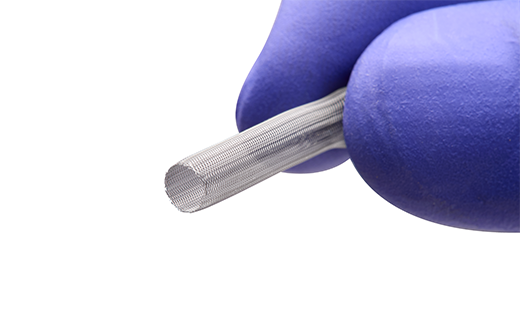
| Purposely Designed | Benefit |
|---|---|
| 48 woven strands, self-expanding nitinol stent design | Maximizes the flexibility and conformability of the stent in complex anatomy |
| Provides permanent, crush-resistant scaffolding | Improves luminal diameter in the treatment of ischemia in the lower leg1 |
| 4 Fr Introducer Sheath compatibility | Low profile minimizes vessel access trauma and traverses complex distal anatomy below-the-knee, from antegrade, retrograde, or pedal approach2 |
| Simple pin & pull designed delivery system | Allows for precise control for delivery of the stent |
| Radiopaque shaft markers | Aides in properly placing the stent at the desired anatomic location |
| 0.014” Guidewire compatible | Smaller guidewire compatibility may reduce wire exchanges with the 0.014” platform |
| 40 cm or 120 cm shaft length | Different shaft lengths allow for optimal device selection for antegrade or retrograde access |
| Wide range of stent sizes to accommodate targeted anatomy | Sizes are specifically designed for the below-the-knee vasculature |
Available sizes
Diameter (mm) × Length (mm). ✔ indicates an available configuration.
| Diameter / Length | 15mm | 25mm | 40mm | 60mm |
|---|---|---|---|---|
| 3.0mm | ✔ 3.0mm by 15mm is available | ✔ 3.0mm by 25mm is available | ✔ 3.0mm by 40mm is available | ✔ 3.0mm by 60mm is available |
| 3.5mm | ✔ 3.5mm by 15mm is available | ✔ 3.5mm by 25mm is available | ✔ 3.5mm by 40mm is available | ✔ 3.5mm by 60mm is available |
| 4.0mm | ✔ 4.0mm by 15mm is available | ✔ 4.0mm by 25mm is available | ✔ 4.0mm by 40mm is available | ✔ 4.0mm by 60mm is available |
| 4.5mm | ✔ 4.5mm by 15mm is available | ✔ 4.5mm by 25mm is available | ✔ 4.5mm by 40mm is available | ✔ 4.5mm by 60mm is available |
The Peripheral Vascular Stent System
Working together below the knee
Below-the-knee vessels are small, tortuous, and unforgiving for rigid implants. The MicroStent™ System’s woven architecture was built around three requirements that matter most in this anatomy.
Flexibility & conformability
The low profile system minimizes vessel access trauma and easily navigates complex distal anatomy below-the-knee, from antegrade or retrograde approach. The self expanding, woven nitinol implant design maximizes flexibility and comfortability without compromising performance.
Visibility
Nitinol construction with a platinum core in each strand for visibility across imaging modalities, as well as radiopaque shaft markers to assist in precise placement.
Scaffolding
A permanent scaffold with low chronic outward force and high radial resistive force, leaving a durable, long-term repair in challenging clinical scenarios.
Technology
Unique Engineering
Platform architecture, visibility, vessel preservation and mechanical performance
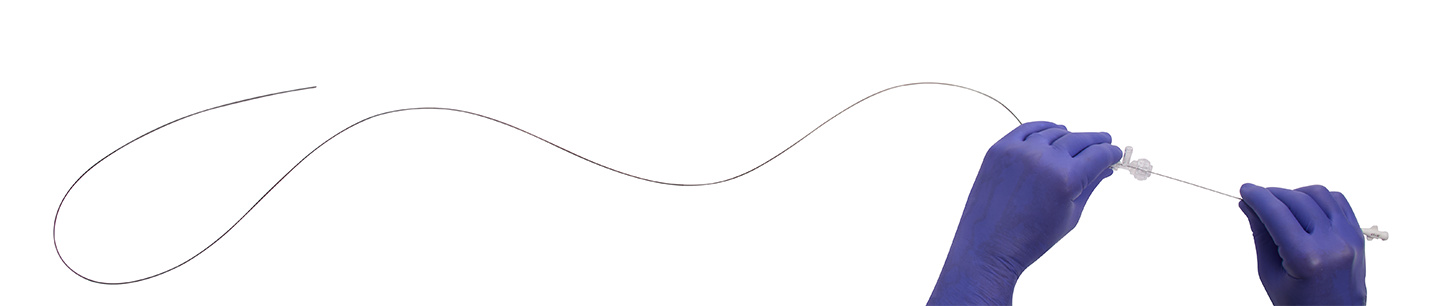
Low-profile delivery system designed to reach distal anatomy. Supports both antegrade and retrograde access across the complete product portfolio.
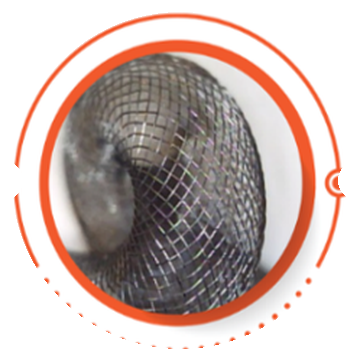
Platform architecture
48-Strand Braided Nitinol Design
Continuous braided architecture designed to conform to vessel anatomy while maintaining consistent wall apposition

Visibility
Platinum-Core Technology
Integrated platinum core in each ultra-low profile, round nitinol strands (<50 microns)
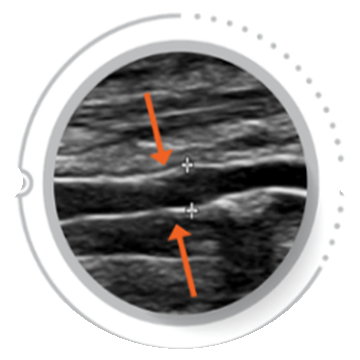
Vessel preservation
Low Chronic Outward Force (COF)
Applies gentle, continuous vessel support designed to minimize chronic vessel wall stress.3
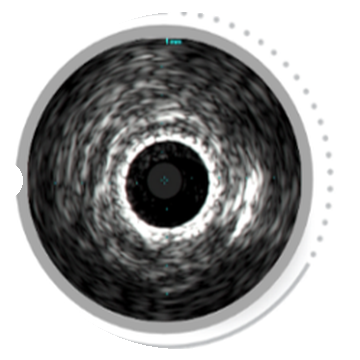
Mechanical performance
Optimized Radial Resistive Force (RRF)
Engineered to resist compression while maintaining long term support in highly complex vessel anatomy.3
References:
- Evaluated through core lab imaging evaluation in a human clinical trial
- Cacuci AC, Krankenberg H, Ingwersen M, et al. “Access Site Complications of Peripheral Endovascular Procedures: A Large, Prospective Registry on Predictors and Consequences.” Journal of Endovascular Therapy. 2021;28(5):746–754. DOI: 10.1177/15266028211025044.
- Data on file.